
01Services
Full-Service MLS®
HDR photos, drone, video, print — all in.
Buyer's Agency
Sharp data, clear negotiation.
Rental Management
Leasing, screening, tenant care.
Advisory
Investment strategy backed by data.
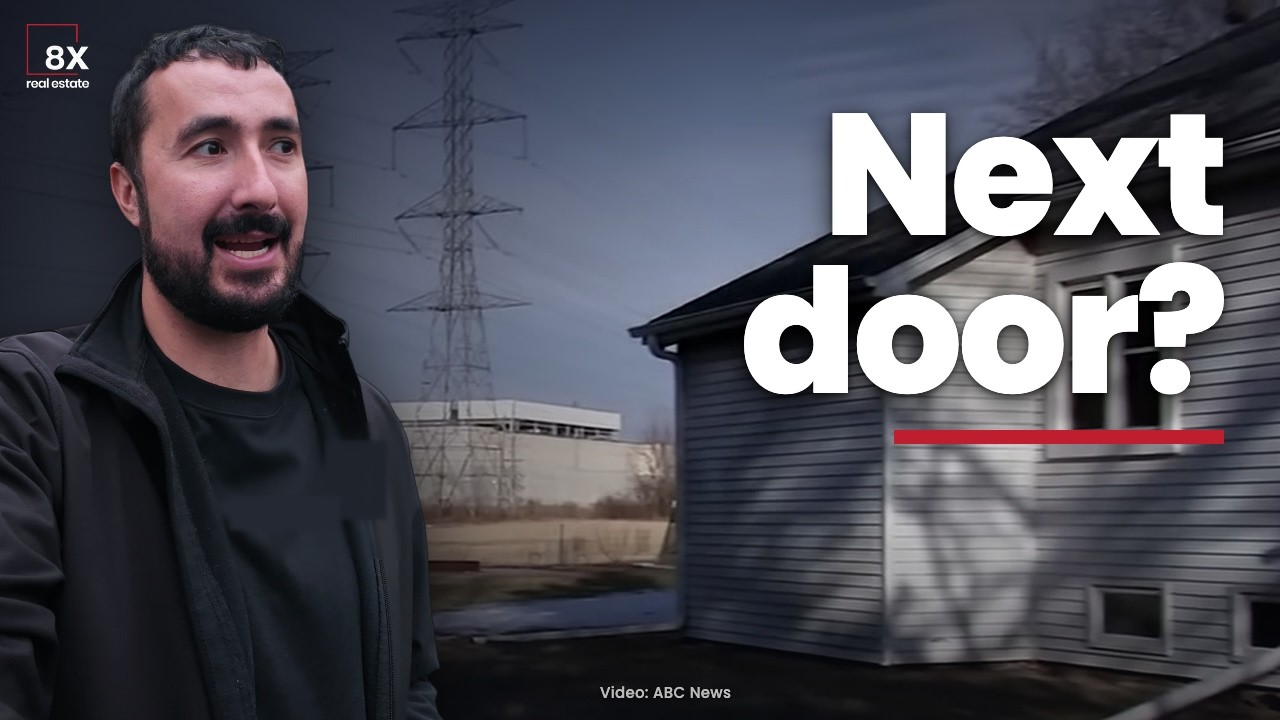
Nobody wants a sewage plant, a jail or a dump next door, but most of us agree we need them. Data centres are a harder sell. They're private businesses, not public services. So people keep asking: what good is one to a town?
Nobody has proposed one in Greater Victoria yet. But in July a Capital Regional District committee of local mayors and councillors voted to have staff study data centres, and in September a View Royal councillor put forward a motion to ban them. So I printed what the critics say and checked each worry: power, water, noise and pollution. Then the money. And at the end, the part a home owner cares about: what happens to prices on the street next door.
Data centres near Victoria: who gets paid, who gets the hum (12 min). Part of the Victoria's LULUs series.
Victoria has had a government computer building for over 40 years. 4000 Seymour Place, near Uptown, was built in 1983 as head office for BC Systems, a company the province owned. It was set up in 1977 to run the government's computers. Today it's a provincial office building, and the province's hosted data centres are in Kamloops and Calgary.
Forty years of government computers in that building, and no fuss. So why the fight now? The first worry people raise is power.
Data centres use a lot of electricity. In Ireland, they used 5% of the country's metered electricity in 2015. In 2025 it was almost a quarter.
BC is said to have clean hydro and power to spare. Clean? Mostly. In 2025, about nine-tenths of the power used in BC was made in BC, mostly from water, not by burning gas or coal (8X calculation from Canada Energy Regulator and other public energy data).
To spare? Not always. Most of BC's power comes from water running through dams. In a dry year there's less rain and snow, so less water behind the dams and less power. That happened in the 2023 drought: BC bought more power than it sold. The extra was about a sixth of what the province used, mostly from Washington State. BC Hydro told its regulator that this cost over $1.5 billion more than planned, and customers are paying it back on their bills over the next few years.
Then the rain came back, Site C was fully running, and in 2026 BC is again selling more power than it buys. So whether there's power to spare depends on the weather.
The province saw this coming. In November 2025, Bill 31 gave it the power to limit how much electricity data centres get. Companies lined up and together asked for about twice what BC was willing to sell, so BC offered half, for now, at a premium of at least 10%.
On October 24, 2026, BC elected a Conservative government. The new premier, Lorne Doerkson, told CBC News that "obviously the data centres are important, but we've got significant challenges with water in this province." A new government can change the rules, so nobody knows yet if the 400 MW limit stays. BC Hydro has delayed picking the winners until the government transition is complete.
Start with the worst case. In The Dalles, a small town in Oregon, Google's data centres used 29% of the town's water in 2021, according to city records released to The Oregonian. The city had gone to court to keep that number from the newspaper.
Why so much water? Computers make heat, and the heat has to go somewhere. One way to cool them uses water: it evaporates, like sweat cooling you off, and that saves power. The other way uses big fans. No water, but more power.
Here, Vancouver Island's first big data centre is planned in Nanaimo, on East Wellington Road, at nearly 200,000 square feet. Fully built, the City of Nanaimo expects it to use 55,000 to 69,000 litres of water a day. The city compared that to a 35-unit apartment building. A car wash uses about 44,000 litres a day.
The owner also signed a water covenant, a promise registered on the land that binds future owners. It caps their water use, and going over the cap costs them $60,000 a year. But read the fine print: nothing in the agreement obliges the city to enforce it.
So on water, it comes down to how a data centre is cooled. A water-cooled one in a dry town is the horror story. Nanaimo's is expected to use about what an apartment building does, and its cap only works if someone checks.
Researchers for Virginia's legislature (JLARC, 2024) found that data centre noise is low and deep, rarely loud enough to break local noise rules, and constant. Virginia's noise rules were written for parties and barking dogs, and the top fine is US$500. So the hum is usually legal, and that's the problem.
The fix is distance, and a sound study before anything is approved. Nanaimo required an acoustic study and a noise covenant before the East Wellington Road project could get its development permit.
The last worry is pollution, and the worst case is in Memphis, Tennessee. Opponents say xAI, Elon Musk's AI company, brought in up to 35 gas turbines at its data centre there before it had an air permit. The local health department later approved 15 of them. xAI says those are backup only; that's the company's claim.
Most data centres look nothing like that. Virginia's researchers found that data centres' backup diesel generators produce under 4% of the region's nitrogen oxides, a gas that helps form smog, and that they mostly run for maintenance tests.
Closer to home, BC Hydro told the BC Utilities Commission that the jump in how much power BC needs is "largely driven by demand from data centres". In October 2026 the commission accepted BC Hydro's plan, which keeps a gas plant on Vancouver Island running.
So in Memphis, where gas was burned without a permit, the critics are right. For a typical data centre in an industrial zone, the measured pollution is small.
Does a town actually get anything out of one? Look at Loudoun County, Virginia, near Washington, DC. It has so many data centres that people call it Data Center Alley.
While that money came in, Loudoun's property tax rate on homes went down: from US$1.145 per US$100 of assessed value in 2016 to US$0.805 in 2026. That's the property tax rate, not power bills, and a home's bill can still rise if its assessed value rises.
So the money is real. Jobs, not so much. Virginia's auditors, quoting industry figures, say a typical large data centre (about 250,000 square feet) runs on about 50 full-time workers, and about half of those 50 are contractors. Construction is different: about 1,500 people at the peak.
In Terrace, in northern BC, the mayor put the case plainly to CBC News: "the whole way this town is going to move forward and survive, is to find industry to tax." In Nanaimo, city staff estimated the data centre would pay about $629,000 in community amenity contributions once fully built, for things like parks.
So yes, there's a benefit. The tax is shared by the whole town. The hum stays with the street next door.
Does a data centre hurt home prices nearby? Two economists, Garrison Schlauch (UC Berkeley) and Simon Greenhill (Harvard), studied 346 data centre announcements across the US (Energy Institute at Haas Working Paper 366, September 2026). It's a working paper and not yet peer reviewed.
Timing changed too. For data centres announced before 2021, prices mostly moved when the building opened. For ones announced since, prices dropped as soon as the news came out. Buyers no longer wait for the ribbon cutting.
Not every study finds a drop. Brookings looked at whole counties, not just the next street, and found home prices up 2% to 5%. Worth knowing: Brookings lists Amazon, Google, Meta and Microsoft among its donors, and all four build data centres.
So it depends how close you look. Across a whole town, prices might rise a little. On the street next door, the US evidence points down.
Could I test that at Seymour Place? Not really: the building is older than any sales data I have. Within 500 metres of it, 68 homes sold in the last two years (8X analysis of VREB MLS® data), and their prices don't show the building helping or hurting.
I read Saanich's zoning bylaw, the rules for what can be built where. The words "data centre" aren't in it. The closest thing is a "cable hub site", a building full of phone and internet equipment with nobody working in it.
In Nanaimo, council voted once, in 2023, to rezone the East Wellington Road land to allow a data centre. After that, city staff issued the development permit, with no second council vote.
Nothing has been proposed in Greater Victoria. But local governments are already talking about it:
if you're buying
Near industrial land, check what can be built across the fence, not just on your lot. Email the planning office and ask: would a data centre here need a public hearing, or could staff approve it? Big lots near big power lines are where data centres go. If there's a covenant on the land, read all of it, including who has to enforce it.
if you're selling
Selling near one that's already been announced? Price your home from what sold after the news, not before.
So what good is a data centre to a town? Somebody does get paid. Just not the residents of the street.
This is part of the Victoria's LULUs series on locally unwanted land uses. The first long form covered Victoria's sewage plant, the dump, the jail and more. For local numbers, see the View Royal and Saanich market pages, updated daily.
Not as of November 2026. Vancouver Island's first large one is planned in Nanaimo, on East Wellington Road. In Greater Victoria, a CRD committee voted in July 2026 for a staff report on data centres, and a View Royal councillor gave notice of a motion to ban them in September 2026.
A September 2026 working paper from the Energy Institute at Haas studied 346 US data centre announcements. Homes within 1.6 km sold for about 7.2% less over the following five years, and homes within 4.8 km about 3% less. Since 2021, the drop has come at the announcement, not the opening. A Brookings study of whole counties found prices up 2% to 5%.
The City of Nanaimo expects 55,000 to 69,000 litres a day once fully built, which it compared to a 35-unit apartment building. A water covenant caps its use, with a $60,000 annual charge for going over.
Yes. Bill 31 (2025) let the province limit electricity for data centres. BC Hydro's 2026 Call for Demand set aside 400 MW over two years, about half of what was asked for, with a premium of at least 10% over the normal rate. The Conservative government elected in October 2026 has not said whether the limit stays.
Saanich's Zoning Bylaw 8200 does not list "data centre" as a use. The closest defined use is a "cable hub site", an unstaffed building for telecommunications equipment.
Buying or selling near industrial land?
Talk to Dustin Miller, Managing Broker at 8X Real Estate. Local data, straight answers, no pressure.
Buy with 8X Sell with 8XSources
Power and BC rules
Water and noise
Pollution
Tax and jobs
Home prices
Across the fence
General information, not legal or financial advice.

Dustin Miller is the managing broker of 8X Real Estate. When he's not on the road, he is on his computer looking at real estate. You can often find Dustin at his office enjoying a bowl of won-ton soup.



Get notifications for sales in this building. 👇


